
Codebreakers of World War II
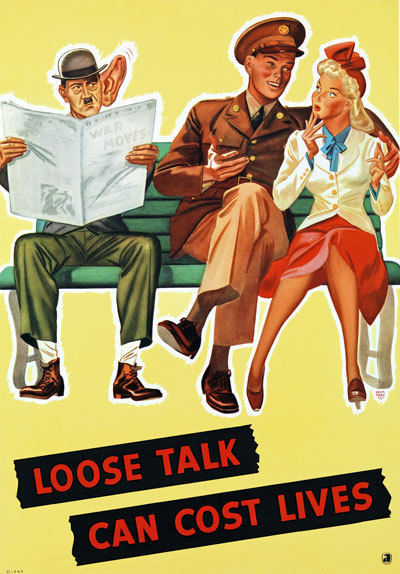
Codebreakers played an important role in the outcome of the second world war. Yet the characters playing such an important role were pulled from both the halls of universities as well as the remotest reservations. The story is both very intellectual and very human.
Keeping secrets
Throughout history people have felt the need to communicate without others, the “bad guys,” knowing. For the Greeks, one approach was the skytale. A strip of paper has a row of random letters. Yet wrap it around a rod of the right width and some of the letters will line up to form a message.
Another approach is to write a series of words. The words can be nonsense or innocent sentences. However, the trick is to arrange the words so that if the right words are selected, a different message appears.
For example, consider the sentence
“I never wanted to find love or have to do schooling with my kids.”
Now take just the first word and every fifth word after that. The phrase now reads.
“I love schooling.”
When radios came into being the coding of messages continued still, but with some differences.
Code names for people places, events, or military operations were used to prevent any unwanted eavesdropper from understanding what is being said.
Messages are now electronically coded in even more complex ways.
The code breakers
During World War II there were many stories about spies and coded messages. Let's talk about some.
Do you believe in MAGIC?
While tensions were building up between the United States and Japan, the United States learned how to decode the Japanese messages sent to their embassies around the world. Project MAGIC.
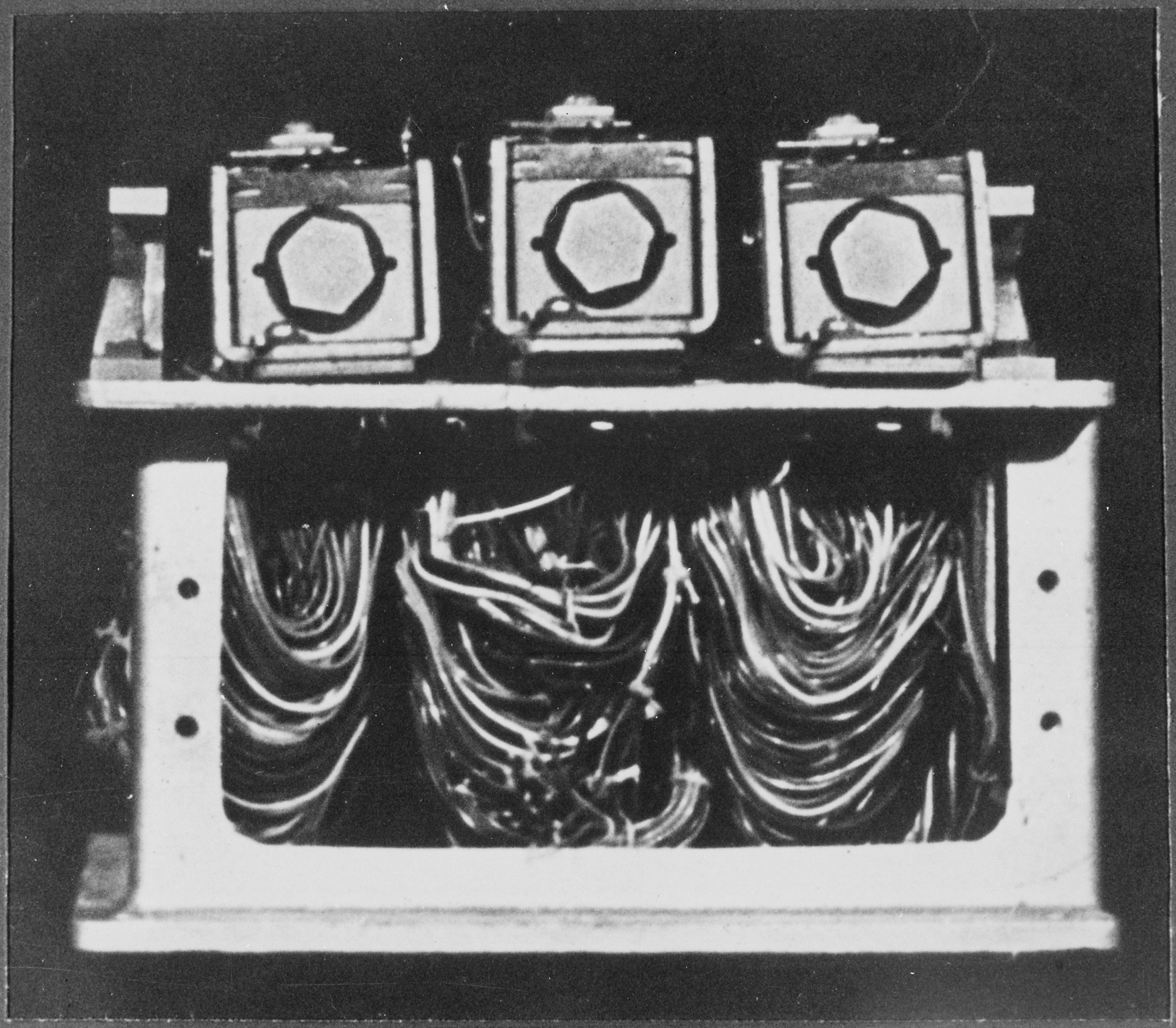
Project MAGIC was so successful, that American intelligence personal often decoded messages before the Japanese personnel at the embassy.
In fact, it is through MAGIC that the U.S. got a hint, before Pearl Harbor, the Japanese were planning something. They intercepted a Japanese message which informed their embassy in Washington D.C. that if tensions were not resolved by November 25, 1941, then "things are automatically going to happen"
Less than a month later, Japan attacked Pearl Harbor.
Guess who's coming
The Japanese launched a devastating attack at Pearl Harbor, bringing the two nations into war. Some months later, in early 1942, the United States Navy was beginning to come back to life and starting to become a real pain to the Japanese.
The Japanese figured it is time to finish the job they had started at Pearl Harbor. Time to invade and take over Hawaii.
But before Hawaii was the tiny island of Midway, code-named by Japan 'AF.'
American code breakers overheard their plans for a place called 'AF' and suspected it meant Midway, but they weren't sure. But how could they be sure?
They had a plan.
They send a telegraph message to Midway to broadcast that their desalinization plant was broken. It was a total sham, but sure enough, the Japanese sent a message that 'AF' had problems with their desalinization plant.
It worked. The U.S. Navy knew where the Japanese would attack next and was ready. The resulting Battle of Midway changed the direction of the war.
If only I had a brain
Breaking codes is an immensely difficult task, with heavy math.
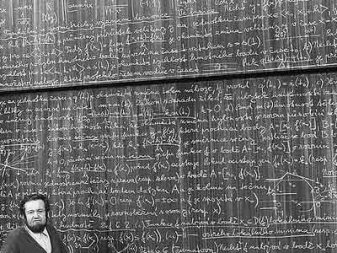
What was needed is a mega-calculator that can crunch a lot of math as well as being flexible for different tasks.
What was needed was a computer.
Enter ENIAC (Electronic Numerical Integrator and Computer), the world's first computer.
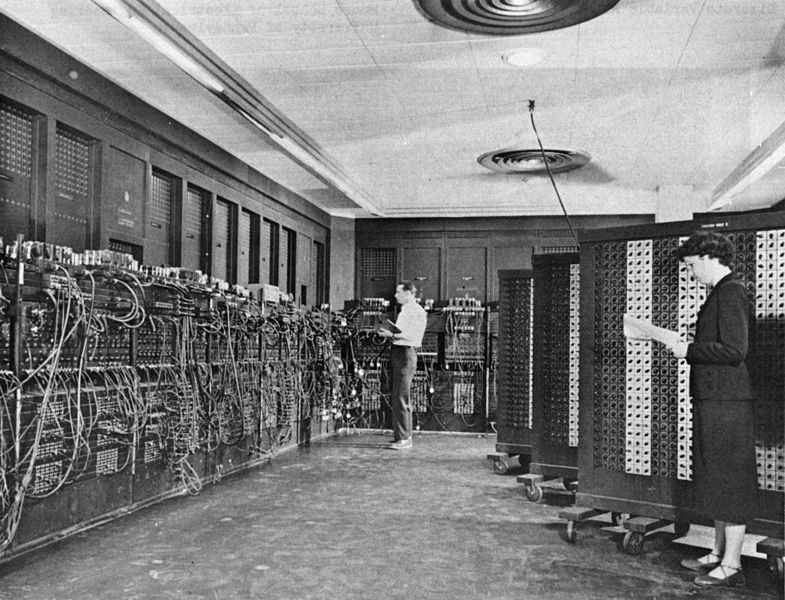
After the war, many of the makers of ENIAC went on to develop computers for commercial use.
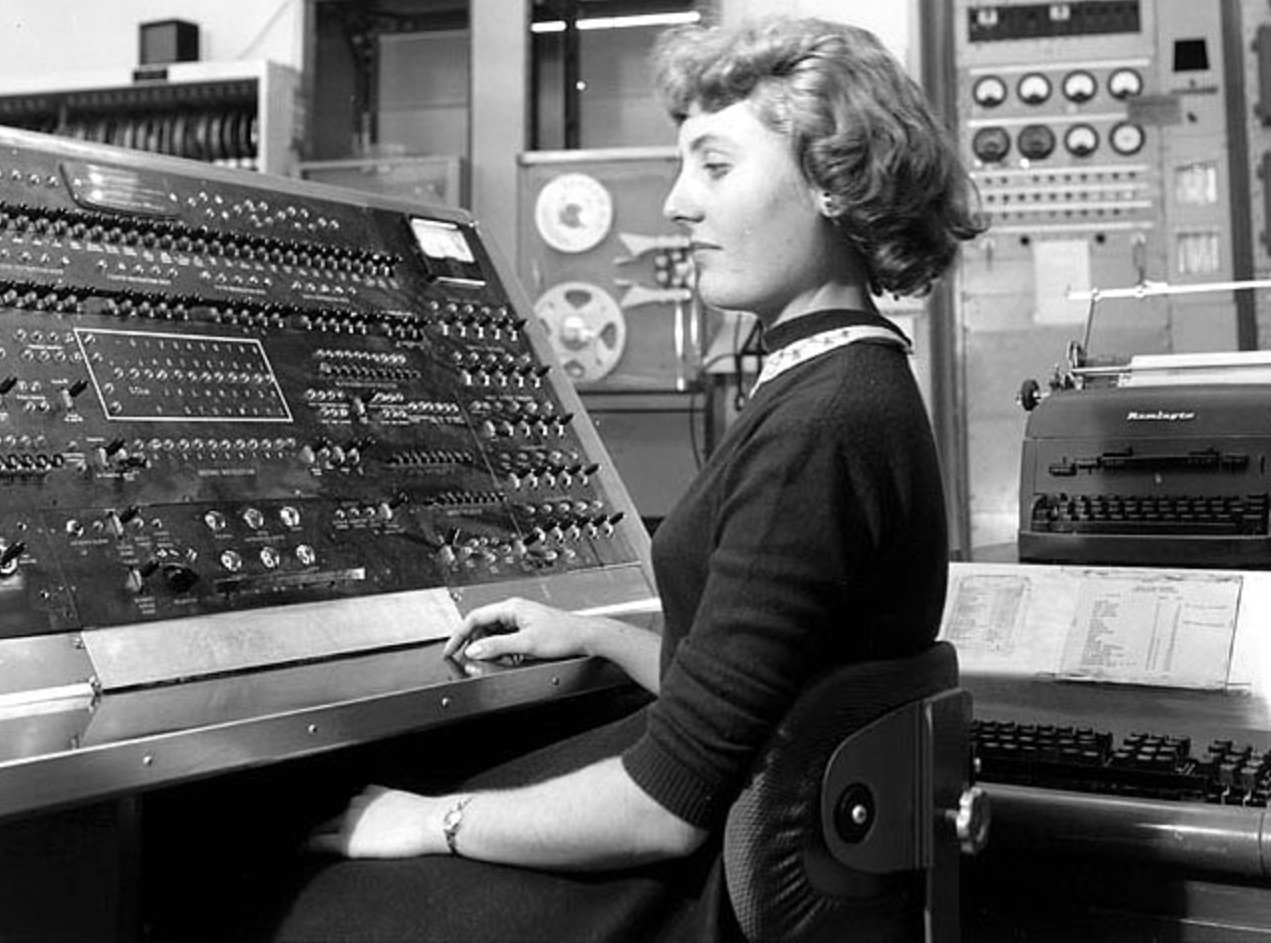
The age of the “electronic brain” had begun.
Now you're talking
One story about code-breaking that must be included is that of the Navajo code talkers.
The Navajo language, as I understand it, is oral only. There are no textbooks and nobody was learning it outside the tribe. So if a couple of Navajos talk in their native language on the radio there is little chance that an eavesdropper would understand what is being said anyway.
So during the war, the army had a brilliant idea. Enlist some Navajos, develop some new code words and employ them to send messages by radio.
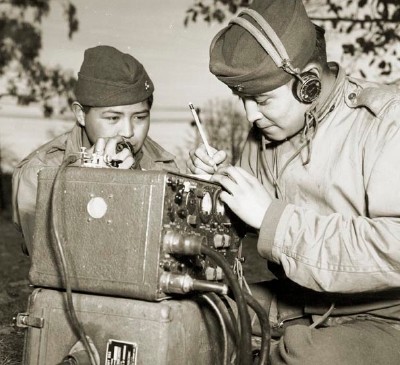
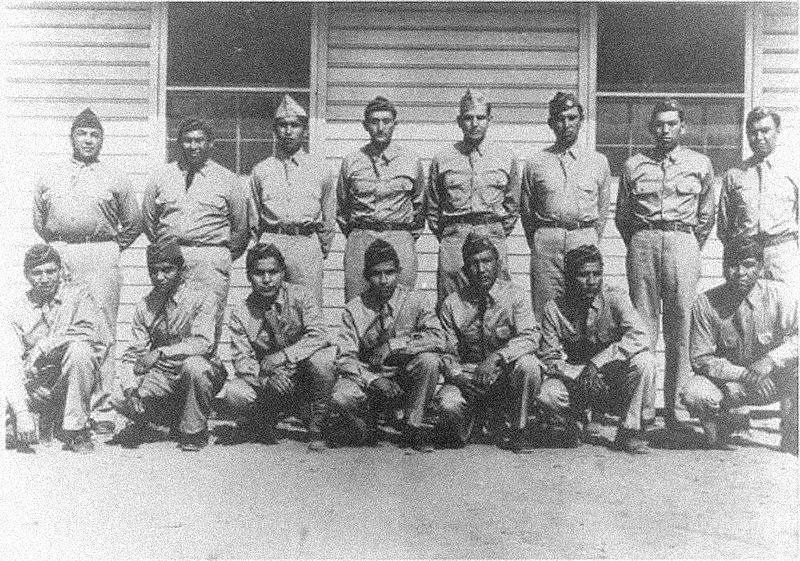
With these Navajo “code talkers” you have a very effective way to send messages over the radio without being understood by the enemy. In fact, during the entire war, no Navajo code talker message was ever understood by the enemy.
Sadly, the code talkers did not receive due credit at the end of the war. This was in large measure due to their huge success. The army, thinking they might be needed in a future war, wanted to keep their work largely under wraps. Only decades later, after better coding methods were developed, was due honor given.
In our day
Coding is now an everyday occurrence. Every time you open a web browser, send an email, use a cell phone or WIFI coding (called encryption) is used so that a third party would find it very difficult to listen in.
All this, because of code makers and code breakers.
Fun for the family
Write some messages disguised in code:
Make a skytale (See here for a description and picture). You can use a cardboard roll if you wish. Wrap a paper strip around it and write a message or word across it. Unwrap and fill in the blank spaces with random letters.
Create a message within a message. Write a message where every fifth word or so spells out a completely different message.
Around the web
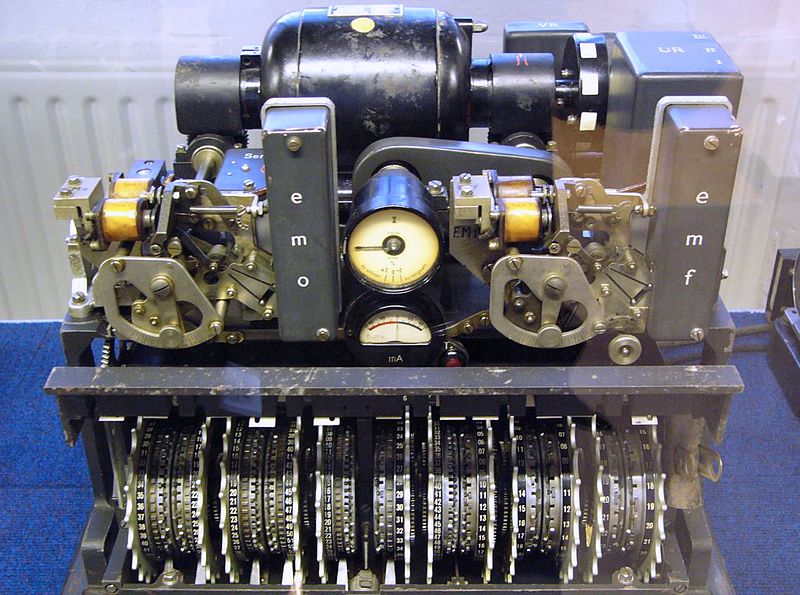
The Enigma machine was the first encoding machine. Here a presenter explains how it works and why it was so hard to decode.
Computer History, Part 1: From Enigma to ENIAC and the UNIVAC
This video highlights the development of the computer, beginning with the German Enigma machine.
Other videos about ENIAC
Some more that can e interesting:
1946 ENIAC Computer History Remastered – This presents a dubbed over film of the ENIAC. This shows how the first computer was “programmed” and functioned.
ENIAC: The First Computer – This discussion of the first computer shows the original computer (at least a part of it) and gives a good explanation about it.
Great Films
School for danger or Now it can be told
A British docudrama about the operations of the British spy network – the Special Operations Executive (SOE). It portrays the activity of British agents that are trained, then dropped into German-occupied France to conduct spy missions, perform sabotage and organize and support the local French resistance efforts.
Some of the actors were actual agents, using their actual techniques and equipment to carry out their operations.
Don't miss out on future posts! Sign up for our email list and like us on Facebook!
Check out more hot topics, go back to Home Page

Comments? You can contact me at mailbox@thehomegrownprofessor.com