The Bill of Rights
Liberty. Freedom.
We all yearn for it.
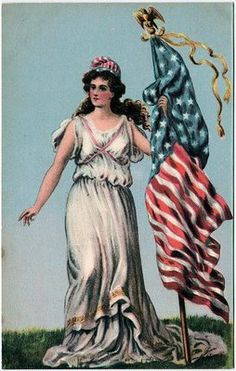
Image from 4th of July postcard, early 20th century.
Yet maintaining it is often a difficult matter. In the United States, this involves the Constitution and, more to the point today, the Bill of Rights.
School is in session. Let's learn about this, often misunderstood, written champion of liberty.
Philadelphia, we have a problem
The year is 1776.
The thirteen American colonies decided they'd had enough of English kings and tyranny and wanted out.
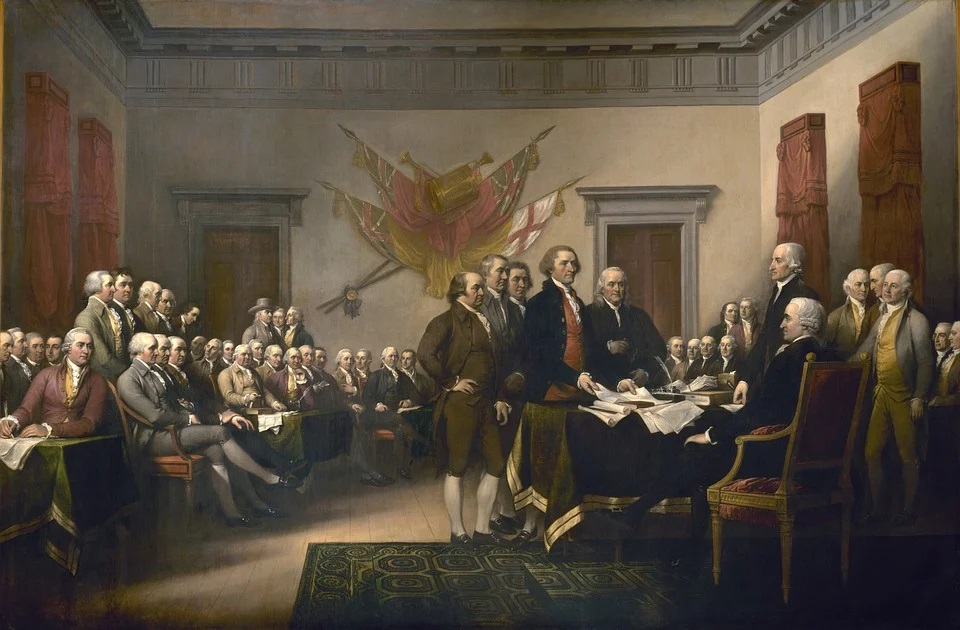
At the same time it was decided they should band together in a confederation under a set of rules called the Articles of Confederation.
Now skip ahead to 1787.
The war for independence is won and the states are now on their own. But all is not well at home:
States are arguing with each other.
Debts from the war cannot be paid.
England is refusing to completely honor its agreements with the Confederation.
The Confederation lacks the strength to assert itself abroad.
The problem was that the Confederation was so weak that it couldn't raise any money or oppose itself against the whims of the states.
Something must be done. But what? Two viewpoints cropped up on how to proceed.
The Federalists
The Federalists saw the solution as replacing the confederation with a stronger federal government. In a federal system, the states turn over certain, specific rights to a federation – rights, such as foreign policy or making money – that make sense to centralize. Some federalists were the following:
The anti-federalists
The anti-federalists were worried that a stronger national government would crush the states' rights and create a new American tyranny. Some anti-federalists were as follows:
It must be remembered that both groups loved Liberty and hated the idea of a king of America. Their only difference lay in how to run an effective government while still holding onto that freedom.
The solution
The solution came with the writing of the Constitution we have today.
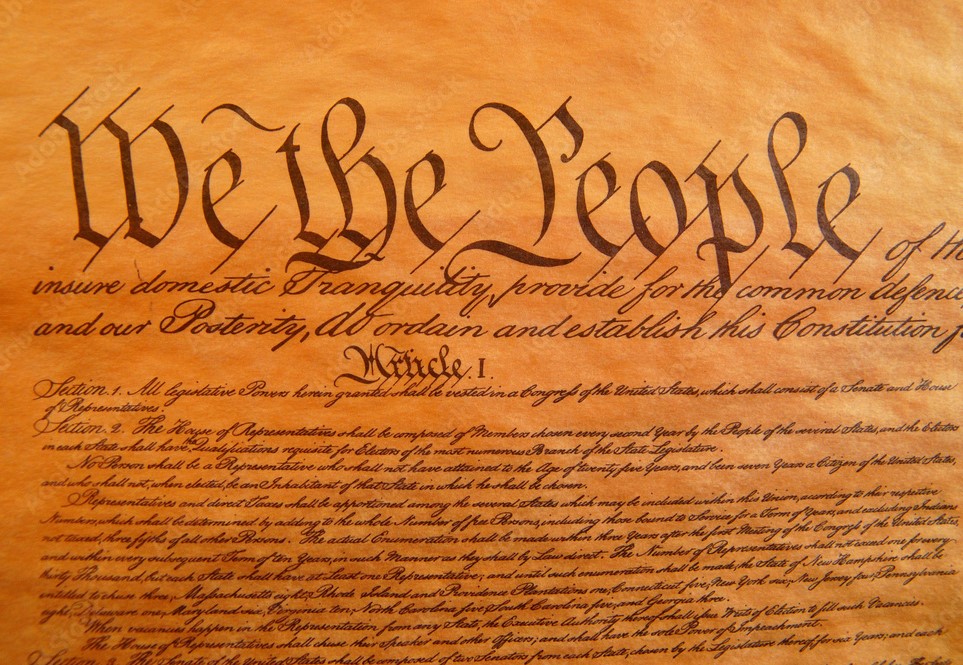
This new constitution gave the federalists what they wanted: a more robust federal government for the United States. Yet with all its safeguards, the anti-federalists were still not comforted.
They'll get their say; the story has yet to be played out.
The thing is, writing a new Constitution is one thing. Approving it and making it legal is another.
The new Constitution required 2/3 of the states (nine of the thirteen states) to approve it.
The constitutional convention that wrote it had no legal authority to force its acceptance on the states. Each state had to vote to accept it for itself.
This approval process required buy-in from the anti-federalists. Appeasing them meant including a statement of individual rights that the federal government cannot violate. For many states, approval for the Constitution only came with the understanding that there would be one.
Enter James Madison.
Madison primarily wrote the original structure of the Constitution and now took on the task of creating a bill of rights. He went through over a hundred suggestions from different people on the rights to protect. During the first year of the new Congress, he presented a long list of proposed rights to the House of Representatives for approval. The House approved 17 amendments (changes), and the Senate then cut it down to 12.
Now it was up to the states to approve. Two amendments didn't make it; ten did. These ten we now call our Bill of Rights.
What does it mean for us?
Thomas Jefferson wrote in the Declaration of Independence:
We hold these truths to be self-evident, that all men are created equal, that they are endowed by their Creator with certain unalienable Rights, that among these are Life, Liberty and the pursuit of Happiness.--That to secure these rights, Governments are instituted among Men, deriving their just powers from the consent of the governed...
The Bill of Rights creates a set of guarantees, rights that are clearly spelled out and are open for all to know. There are just some things the government can't do.
Period.

The amendments
So, what's in the Bill of Rights? Let's break them down:
The First Amendment is mainly about freedom to exercise our God-given right of conscience, and gathering.
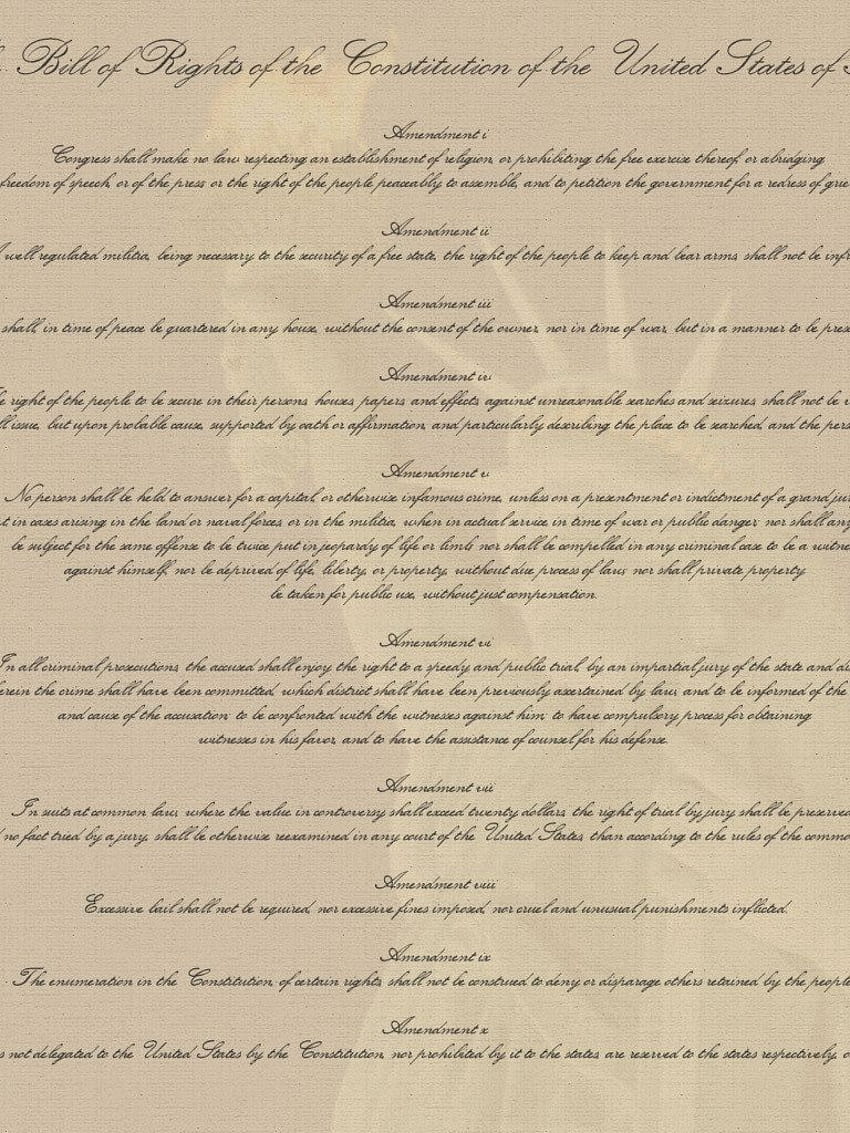
Congress shall make no law respecting an establishment of religion, or prohibiting the free exercise thereof; or abridging the freedom of speech, or of the press; or the right of the people peaceably to assemble, and to petition the Government for a redress of grievances.
The Second Amendment guarantees the public right to armed self-defense.
A well regulated Militia, being necessary to the security of a free State, the right of the people to keep and bear Arms, shall not be infringed.
The Third Amendment protects against people being forced to house soldiers.
No Soldier shall, in time of peace be quartered in any house, without the consent of the Owner, nor in time of war, but in a manner to be prescribed by law.
The Fourth Amendment protects people from government searches without reasonable cause.
The right of the people to be secure in their persons, houses, papers, and effects, against unreasonable searches and seizures, shall not be violated, and no Warrants shall issue, but upon probable cause, supported by Oath or affirmation, and particularly describing the place to be searched, and the persons or things to be seized.
The Fifth Amendment guarantees that a person cannot witness against themselves, be tried twice for the same crime, and a due process of law.
No person shall be held to answer for a capital, or otherwise infamous crime, unless on a presentment or indictment of a Grand Jury, except in cases arising in the land or naval forces, or in the Militia, when in actual service in time of War or public danger; nor shall any person be subject for the same offence to be twice put in jeopardy of life or limb; nor shall be compelled in any criminal case to be a witness against himself, nor be deprived of life, liberty, or property, without due process of law; nor shall private property be taken for public use, without just compensation.
The Sixth Amendment gives more guarantees for those accused of a crime.
In all criminal prosecutions, the accused shall enjoy the right to a speedy and public trial, by an impartial jury of the State and district wherein the crime shall have been committed, which district shall have been previously ascertained by law, and to be informed of the nature and cause of the accusation; to be confronted with the witnesses against him; to have compulsory process for obtaining witnesses in his favor, and to have the Assistance of Counsel for his defense.
The Seventh Amendment is a right of trial by jury.
In suits at common law, where the value in controversy shall exceed twenty dollars, the right of trial by jury shall be preserved, and no fact tried by a jury, shall be otherwise re-examined in any court of the United States, than according to the rules of the common law.
Eighth Amendment, punishment for crime cannot be unreasonable.
Excessive bail shall not be required, nor excessive fines imposed, nor cruel and unusual punishments inflicted.
The Ninth Amendment states that people can have other rights beyond what is listed in the Bill of Rights.
The enumeration in the Constitution, of certain rights, shall not be construed to deny or disparage others retained by the people.
The last one deals with the rights of the states. If a right isn't given to the federal government or denied to the states, it remains with the states.
The powers not delegated to the United States by the Constitution, nor prohibited by it to the States, are reserved to the States respectively, or to the people.
The Bill of Rights is a testament to a people seeking liberty, seeking a free life with proper protection from the government and each other. Looking through the process that gave us the Bill of Rights shows a generation committed to this ideal.
And now, we have it today, an instrument of freedom. It is now left to us to use it to see our full God-given potential.

Great Books
The Federalist Papers
This is a collection of 85 articles written by Federalists to put forth their views on a federal government.
The Anti-Federalist Papers
This is a collection of articles, similar to the Federalists, by those opposing a stronger central government.
Great Videos
Liberty's Kids
This miniseries was produced for PBS and is aimed at teaching children about the events of the American Revolution and ending with the Constitution (but who needs to be a kid, I like them as well). During the course of the series, the main characters manage to get placed in almost all the events of the time. The main characters are as follows:
Moses – A freed slave who works in Benjamin Franklin's print shop.
James Hiller – Ann orphan working as an apprentice at the print shop.
Henri Richard Maurice Dutoit LeFevbre – a French orphan earlier rescued by Moses and James from being held prisoner on a ship. He too works at the shop and causes plenty of mischief.
Sarah Phillips – an English girl who comes to the colonies to look for her father and stays at the shop. She is the sole loyalist in the group – at first.
A More Perfect Union: America Becomes a Nation
This video follows the tumultuous convention that created the Constitution. Here, one gets a sense of the heated issues that had to be faced and overcome.
I'd love to hear from you. Feel free to email me.
Don't miss out on future posts! Sign up for our email list and like us on Facebook!
Check out more hot topics, go back to Home Page

Comments? You can contact me at mailbox@thehomegrownprofessor.com